
PCT -> Penang
the dirtbagging life continues...

note: pics are below the text. click on “view whole message” to see ‘em all.
***
Krabi, Thailand (May)
I write to you from Tonsai, a sleepy little stretch of beach blocked off from the mainland by mountains. It’s low season here, and the longtail boats that bring tourists from the nearby harbor town float empty and listless on the shore. Only the rock climbers remain.
My day looks like this: I eat a pb&j for breakfast, climb up world class limestone caves and drippy karsts with my new friends, stuff fresh Thai food into my face, climb some more, stuff for fresh Thai food into my face, hose the dirt and sweat and dust off my body, and fall asleep in my little pink room in the jungle. $8 a night, and just enough space for me, my climbing gear, and my yoga mat.
It’s a good life. :)
I can’t complain about the last four months either, even the less glamorous bits. I’ve climbed up volcanoes in Java, endured 17-turned-24-hour bus rides across Indonesia, hiked alongside orangutans in Sumatra, fallen off a motorbike with my little cousin in Bali, scuba dived in the Perhentians, opened up my heart in dreamy Karimunjawa, shat out my brains in squatty toilets across southeast Asia. And perhaps best of all, I’ve gotten to know some cool, crazy, thoughtful, smart, generous and distinctly bad-ass individuals, many of whom could easily become a blogpost unto themselves.
But as I write, I find myself returning to Penang, home base for my travels the last few months. The island metropolis is Malaysia’s cultural and foodie capital, home to long-standing Chinese, Malay, Tamil communities. It’s not uncommon to hear an Indian uncle ordering in Hokkien Chinese at his favorite hawker stall, or stroll past a mixed family with kids who don’t look too different from me and my siblings. It’s also where my mother was raised and her family still resides. Hope you enjoy this little slice of it.
***
Island Park, Penang (February)
Our home sits between the jungle and the city. Ask the neighbors for the corner house by the jambu tree, spilling over the gray-post fence into the street below. If you come in the morning, when the birds are at their shrillest, you’ll see an old man in a big hat sweeping out the porch with a sheaf of dried palm fronds. That’s Ah Kong, my grandfather. Afterwards, he’ll tend to his garden — the epiphytic orchards, the dozens of little cuttings he is forever gifting to his friends.
I’ll be lying on my mattress and listening to the palm fronds brushing the tiles, the flock of mynas gossiping from the trees, the cuckoo whooping in ascending pitches. I used to conjure this moment, morning-fall in my grandparents’ tropical island home, during my coldest nights in the Sierra’s. The thought of it could feed me a spoon of warmth.
Eventually I’ll roll myself out of bed, shut off the air conditioner, open the door into the day’s sticky heat. Clamber down 17 creaky wooden steps to the kitchen, where my grandmother sits. I’ll greet her in the common Hokkien way: Amah, have you eaten yet? Lu cheah pa liao? What I mean is, is I care for you and for your health, so I am asking if you are nourished, and if not, let’s eat.
Amah will drive us to the local market, and illegally park right next to the hawker stalls. Decades of suffering through Penang traffic earns one such privileges. We’ll fetch a loaf of bread and a jar of fragrant pandan jam, or maybe some freshly rolled and fried roti and dahl cha, or perhaps some char quay teow — wok-charred rice noodles with bean sprouts, shrimp, and green onions. Back home, a hungry-looking squirrel will walk our fence, away from the jambu tree, its ostensible breakfast. Amah will scold it vigorously. Stupid squirrel, go to the tree and eat.
A month later, when the jambu have ripened on their branches, we’ll find the same squirrel ripping open the plastic bags Ah Kong has wrapped carefully around the fruit, chomping on the sweetest morsels. In Penang, even the squirrels have strong opinions about their food.
After breakfast, the day passes itself. I could sit down and read a book cover to cover or hang wet clean clothes to dry on the porch or lay down on the cool marble floor. If I’m horizontal, the neighborhood soundscape often lulls me to sleep. Amah’s favorite spicy romance series narrated by the text-to-audio TikTok voice. CGTN, Ah Kong’s favorite news channel, spoon-fed from the CCP’s propaganda department across the South China Sea. Pounds and blasts from a nearby hill, which the city is cutting open to build a highway through the island.
An hour before Auntie Jo gets home from work, I jog around the neighborhood. I start at the bilimbing tree that Amah planted to celebrate the birth of a cousin, and nod at all the uncles and aunties I pass on the circuit. Island Park is essentially a retirement community for Hokkein Chinese folks. The gossipy evangelist neighbor who we call CNN, the old man around the block who asks me how many kilometers I’m doing today, where I’m going next.
Everyone wants to know the answer to that question: where I’m going next. Which country, which career. I'll have to decide at some point. But for now I’m more interested in past and present. How did Malaysia— this predominately Muslim Malay peninsula — become home for my Buddhist Chinese family? Why did my mom leave this idyllic paradise for the midwest’s pale and chilling pastures? And, particularly pertinent to the itinerant traveller, how did they all make a brand new place feel like home?
My family’s story in Penang began eight generations ago, when my grandmother’s ancestor arrived stepped off a boat from Fujian. He was adopted by the Khoo clan, the most prosperous of the Chinese clans (ok, gangs, if we’re being perfectly frank) that formed to nurture and defend their communities’ interests. For the Khoos, this included providing defense for neighborhood businesses, opening a Chinese school, growing opium for the British, operating gambling dens, and, according to some of my relatives but vehemently rejected by others, human-trafficking.
Before I came to Penang, this history was distant, intangible legend. But here, the past and present elide. When we drive around Penang with my grandmother’s younger brother, he points out the buildings (several plantations, apartment complexes, and 200+ shophouses in the UNESCO heritage-protected downtown area) that the clanhouse still owns and profits off of — maybe bought with opium money, but clean businesses now, he assures me. I remain unconvinced being a landlord is an honest affair.
Our traditions moor us in our roots, too. Every year, my grandparents return to their parents’ and ancestors’ burial plots for the annual grave-cleaning ceremony. We leave food and burn paper sacrifices, like money and clothes, iPhones and Wifi routers — bet those are real head-scratchers in the afterlife. I reckon a decent number would prefer opium.
But when it comes to bringing the past back to life, there’s nothing that can beat the ghosts. There are two types of Malaysians, one of my auntie likes to say: those who have seen a ghost, or those who know someone who has seen one. Nota bene: If you don’t believe in the supernatural, well, come visit and chat with my more spiritually prescient family members for a bit, and then you can decide for yourself.
How come the ghosts cluster in Malaysia? My best guess is the collision between tradition and modernity, which coexist side by side here in a deeply dizzying way. The seven-story luxury mall that houses my bouldering gym is next door to a tiny Hindu temple home to a handful of shirtless monks in dhotis. There are mosques, and churches, and graveyards sandwiched between skyscrapers, and shrines to ancestral deities on practically every street corner, hawker stall, and hilltop. Some, like the Snake Temple (operated by a group of Hokkien clans, including the Khoo’s) attract pilgrims from around the world. But my personal favorite religious locale is the drive-through Hindu temple by the Botanical gardens, where cars pop in and out for blessings of vehicular safety.
This might be my favorite part of the city — the whiplash of moving betwixt past and present. Sometimes I imagine the faintest trace of a ghost walking around Pulau Tikus. A 16-year-old girl in a blue pinafore and endearingly bug-eyed glasses, SAT book in hand, headed to her grandmother’s place. She’s going to get off the island and see the world outstation, build a new home for herself off in some foreign location. And thirty years later, her daughter will come back here, full circle, to sorta kinda (with more resources, all the riches and trappings of an all-American childhood, of course) do the same.
***
My mother left this island when she was 17 years old, for Ohio, of all places. She speaks about Penang with a love I used to envy as a kid, not because I lacked for her love, but because I wanted to know and love a place as much as she knew and loved Penang. When I first came here, I thought I might find her stories come to life. But much of it, like her favorite auntie, the little cousins running around the ancestral clan house every new year, the grandfather who always peeled the skin off the grapes for his favorite granddaughter, were dead or gone.
But much of her family, our family, remains. I get to know them, what they like to complain about (increasing food prices and decreasing food quality) and what they like to do (eat out a lot, anyways). I get to know their routines, how I can fit into them. I pry them for stories about their past, which is also mine. And I get to know the land. The spine of hills that cuts down the middle of the island, the yellowing of the light before a monsoon breaks open the sky.
I don’t have a Malaysian passport, or even an ID card. My family has land and roots here, but my name is not on any deed or title. I guess it’s kind of like being on the PCT. At the end of the day, I’m only a traveler in Penang, here one day and off to some unknown down the road the next. But I figure that doesn’t make me belong to it any less.
Maybe this is how one builds a home: she becomes intimately familiar with a place and its people, until the very land becomes something beloved (and not, necessarily, something she owns).
***
Krabi, Thailand (May)
How would it feel if I wasn’t allowed to come back to Penang? I can’t imagine it.
Half of the world’s 14 million Palestinians and counting don’t have to. They live this reality, a life in exile.Their homes now belong to another people who, at risk of over-simplifying a massively complex situation, have gone from being victims of ethnic cleansing to participating in (or at least, abiding and therefore being complicit in) another ethnic cleansing. Because they are scared of losing their homes; their sense of safety, of community, of belonging.
The way I see it, looking into the past is another way of looking into the future.
I don’t have anything smart or sad or pithy to say about this conflict that anyone on your newsfeed hasn’t already, so I’ll leave it at this. There’s a four meter concrete wall separating the main Tonsai street from a mega-resort that bought out the entire half kilometer stretch of beach front properties a few years ago. The resort displaced all the cheap hostels and restaurants far back into the jungle, where most are now collapsing from the effects of COVID and their distance from the tourist action on the beach. The climbers have spray painted a number of murals on the wall’s surface. My favorite:
“From Berlin to Tonsai to Palestine — tear down the wall”.
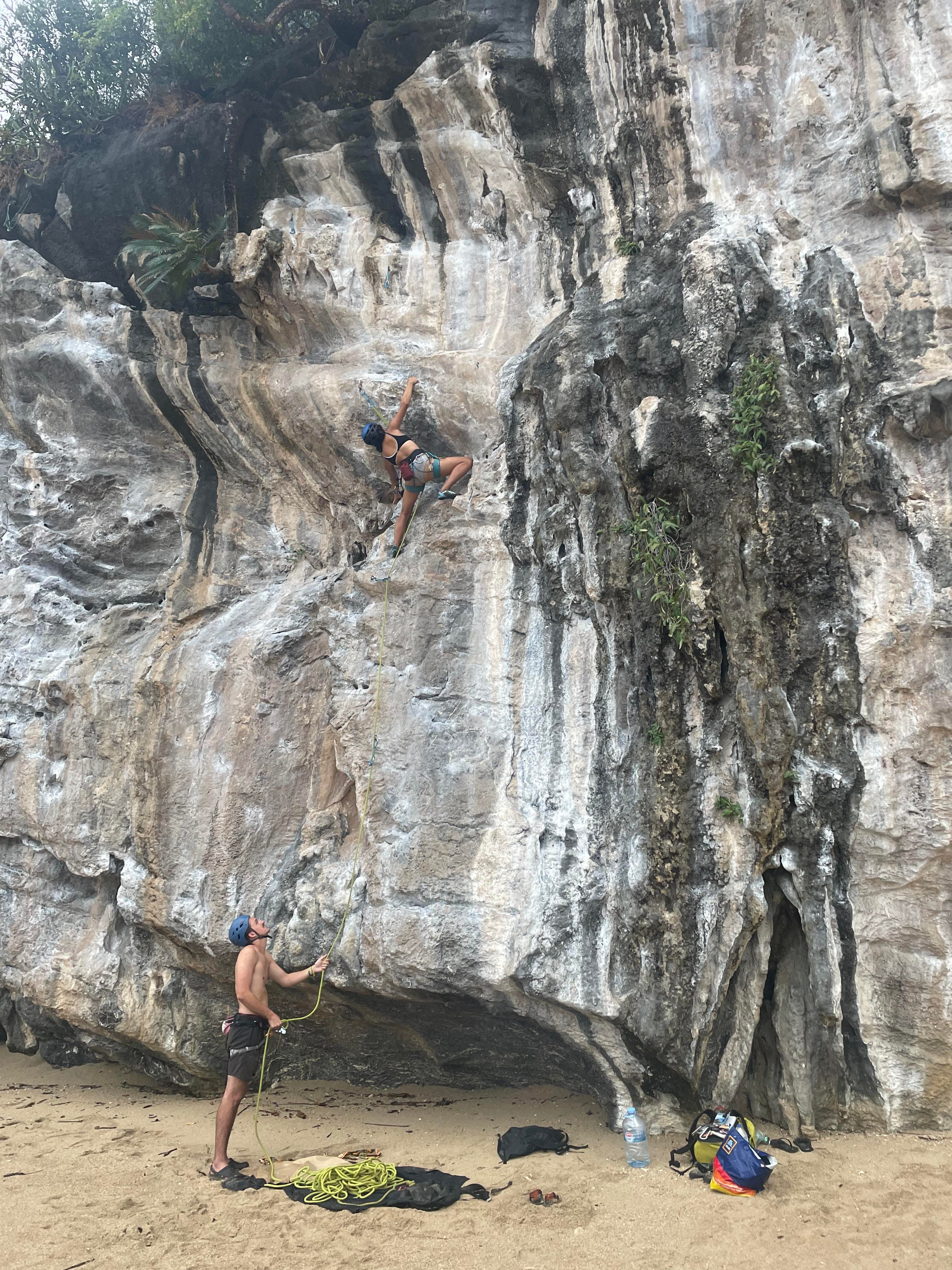
leading on the beach
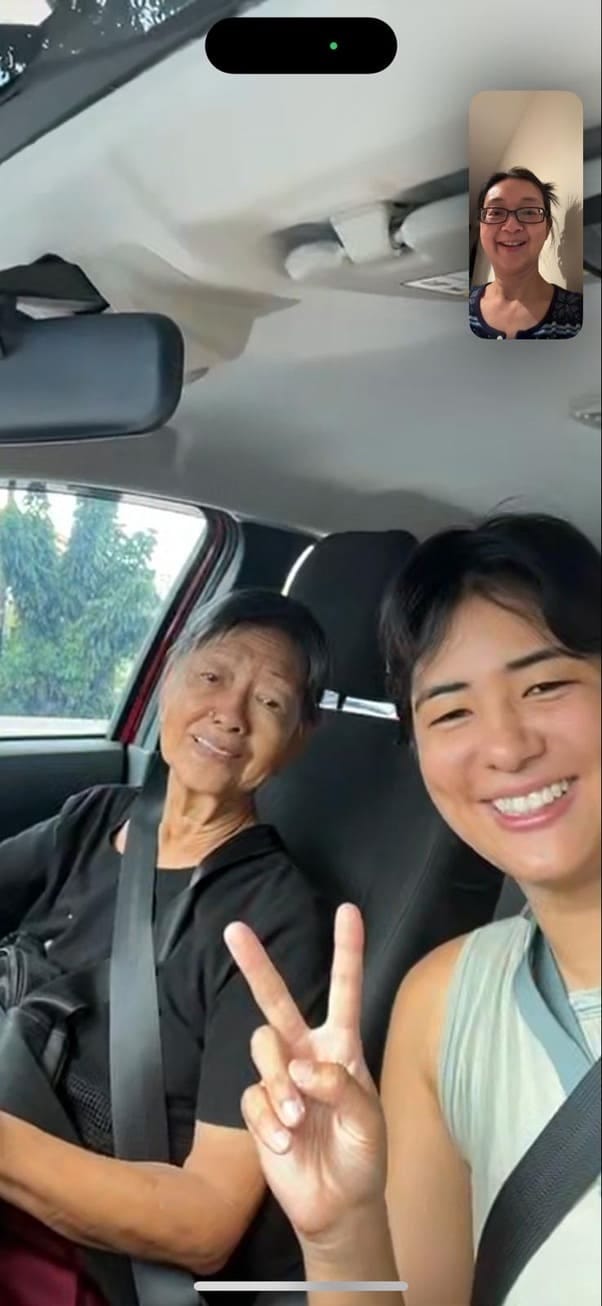
Amah, daughter, and granddaughter Penang)
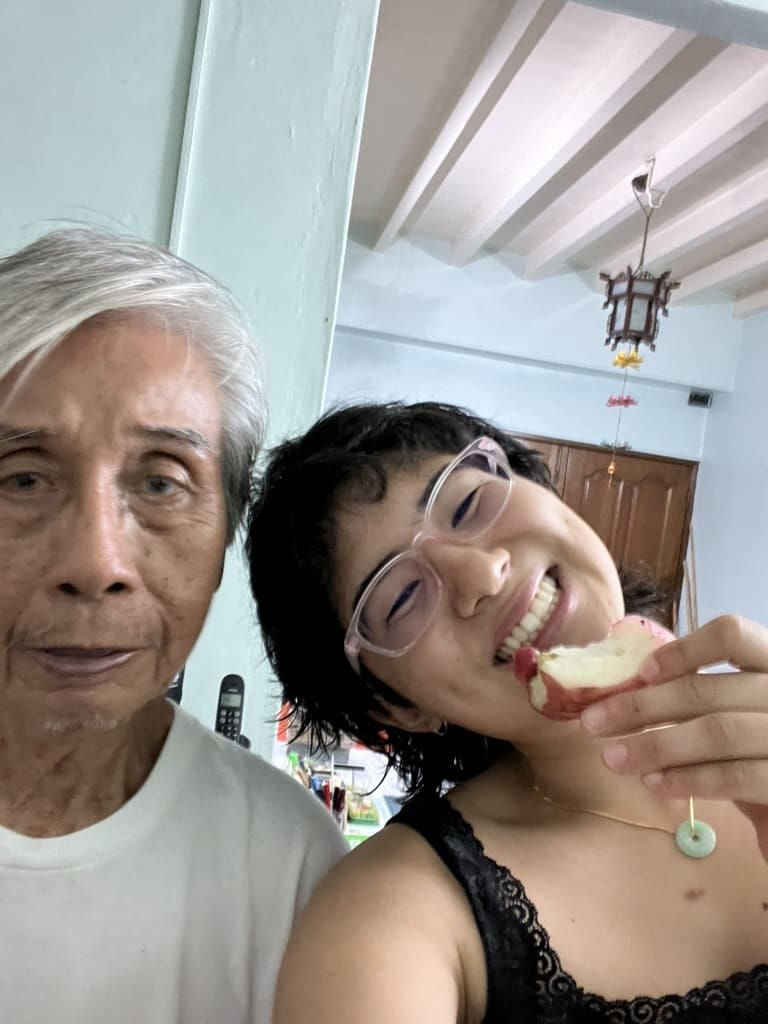
Ah Kong, granddaughter, & jambu (Penang)
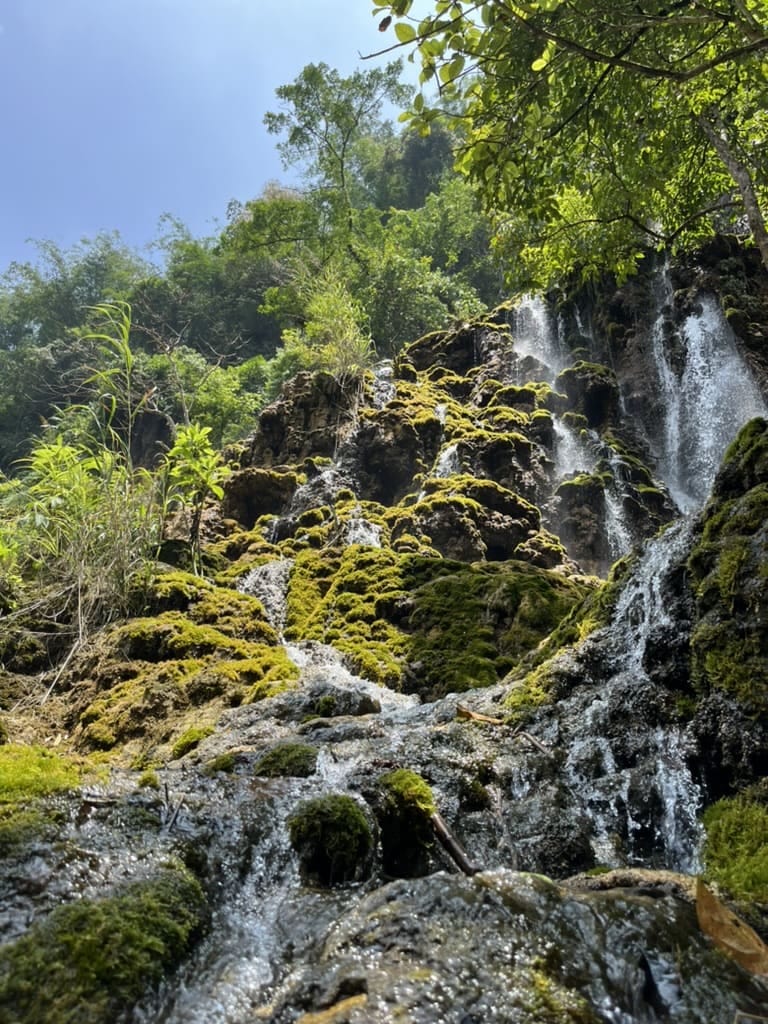
mossy staircase (Tumpak Sewu, Java, Indonesia)
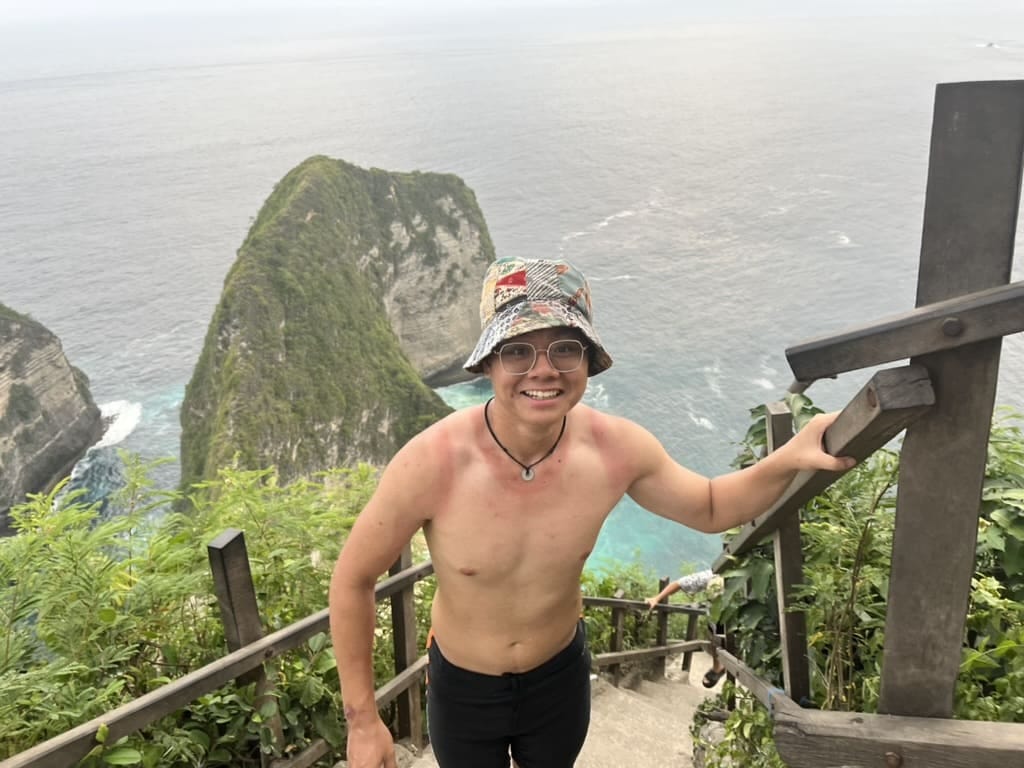
cousin Afan ft. sunburn and cute hat (Nusa Penida, Bali, Indonesia)
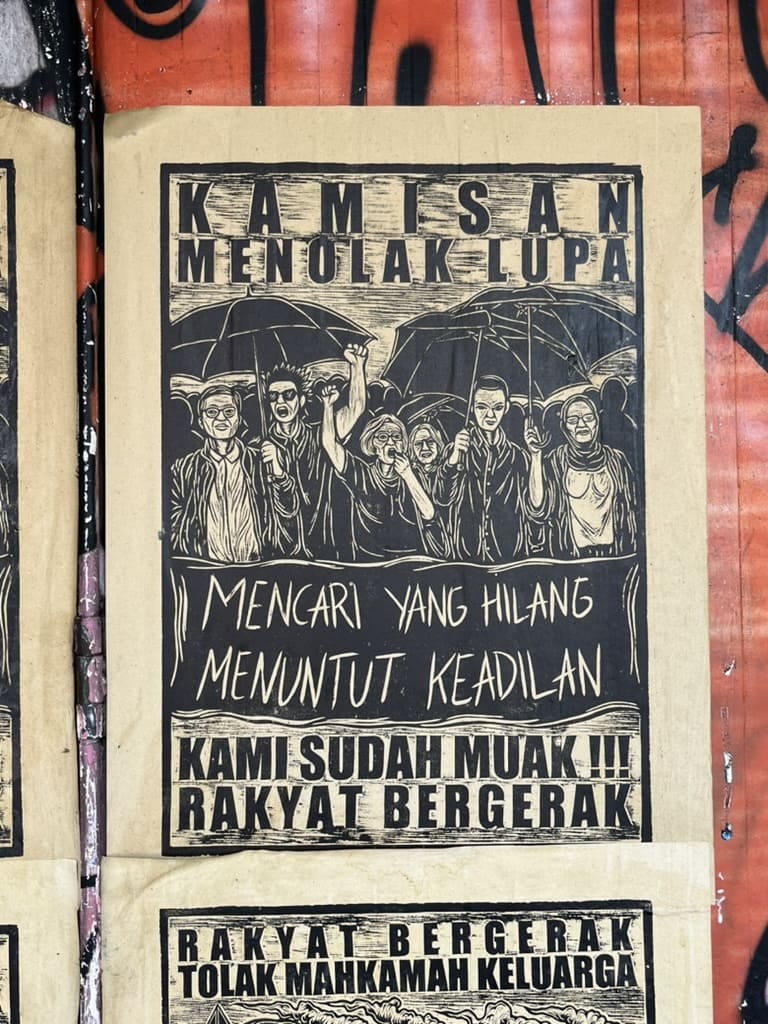
protestors seeking justice for Indonesian human rights violations gather weekly in cities across the country, wielding black umbrellas. Highly recommend We Have Tired of Violence by Matt Easton for more on the killings and abductions that ocurred under Suharto’s reign and the murder of an advocate who exposed them
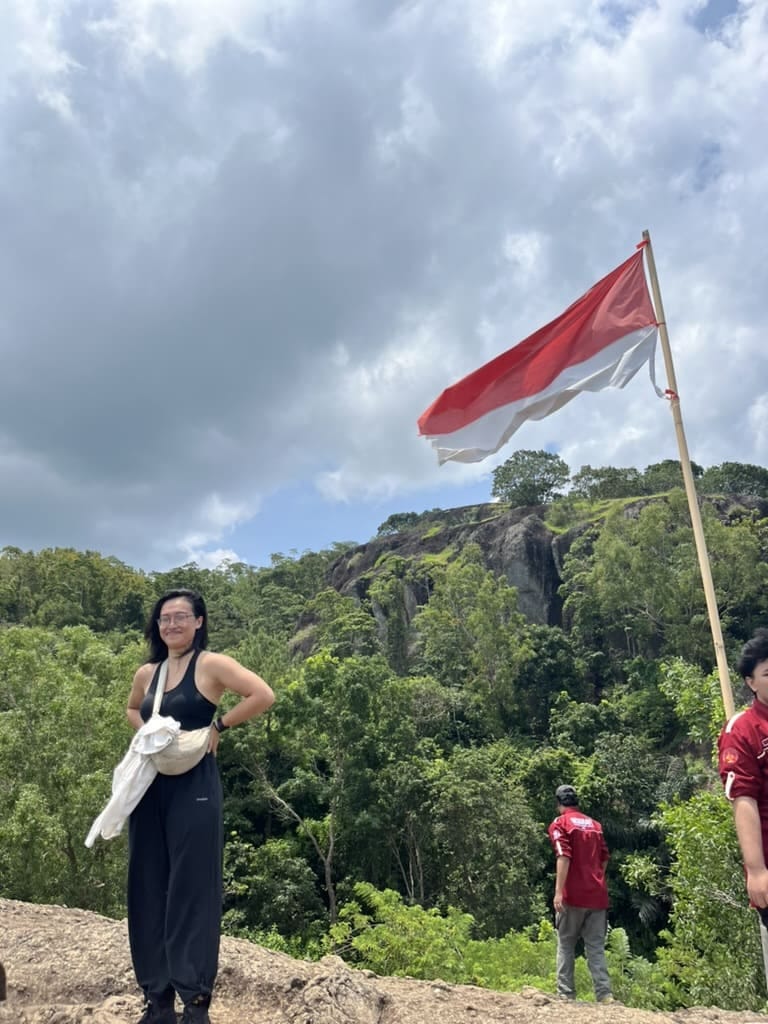
Carmen on a mountain (somewhere near Yogyakarta, Indonesia)
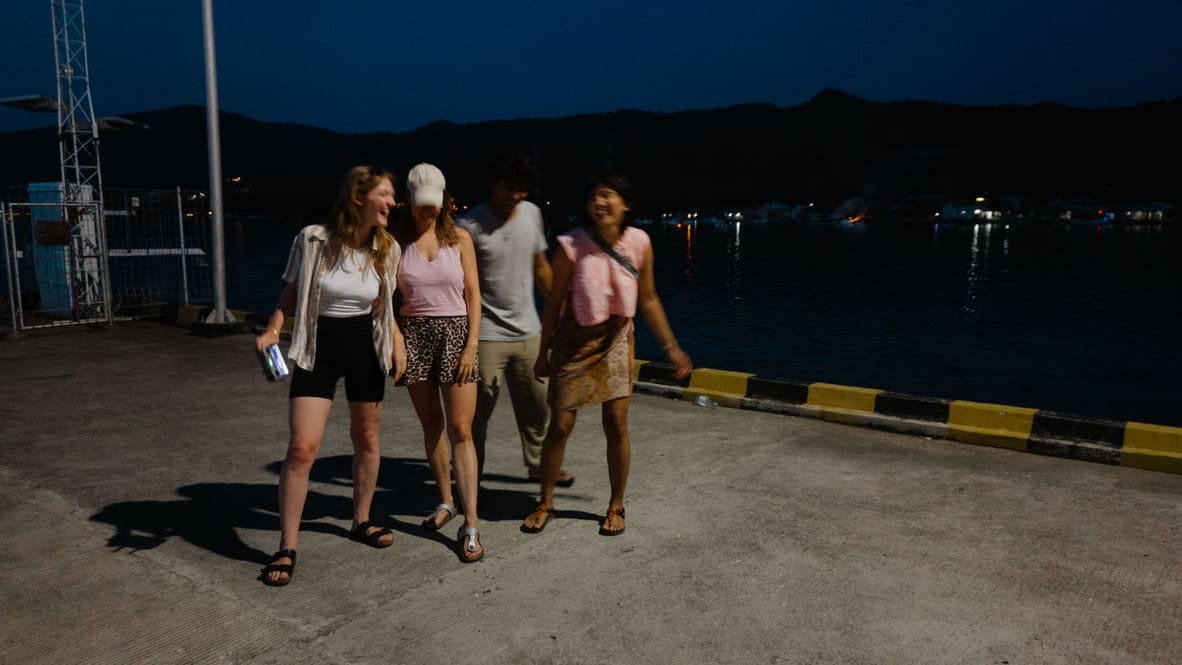
messing around with Lea’s drone on the dock (Karimanjawa, Indonesia)
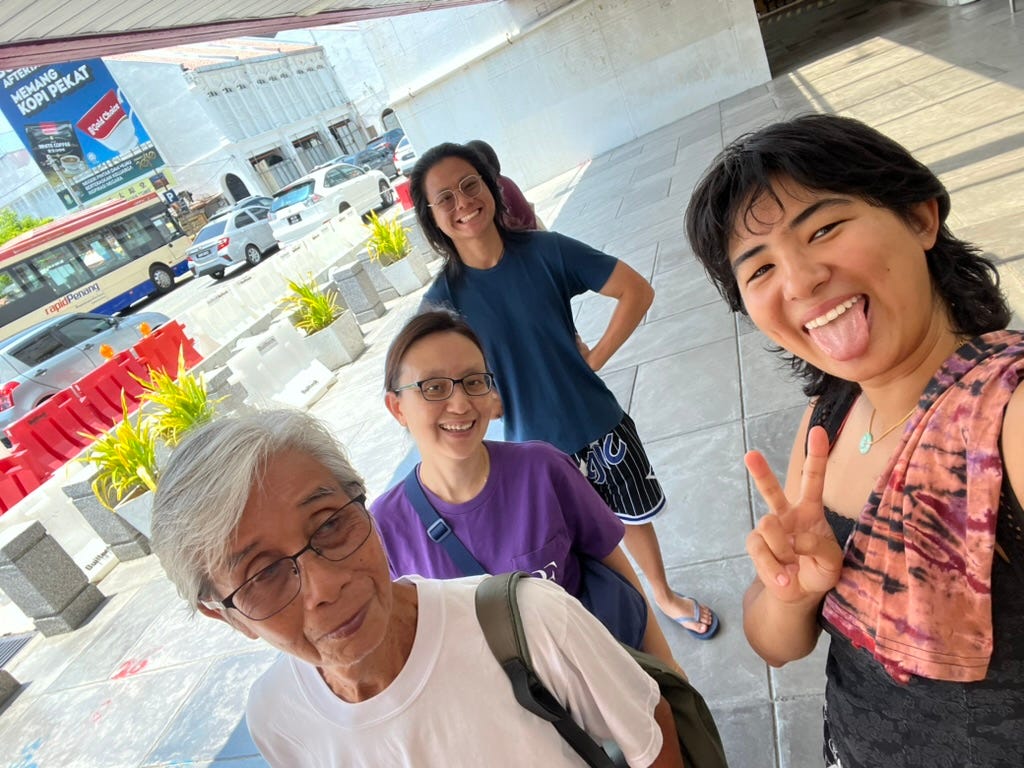
Ah Kong, eternal skeptic of my selfie game (Penang)
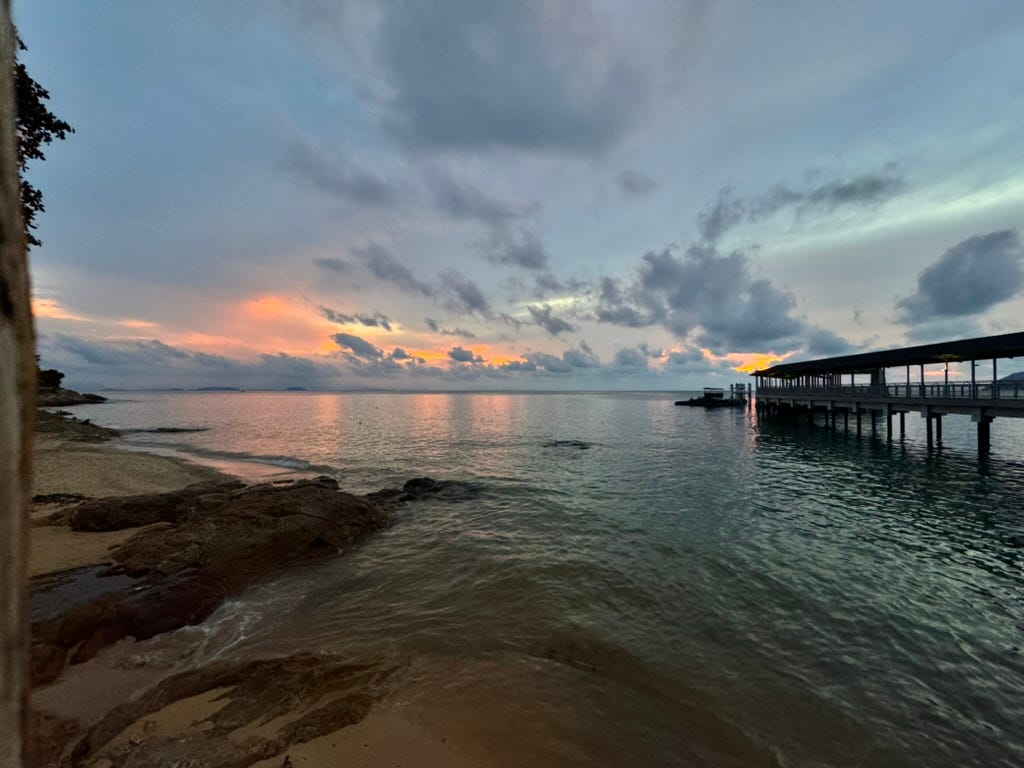
Perhentian Islands, Malaysia
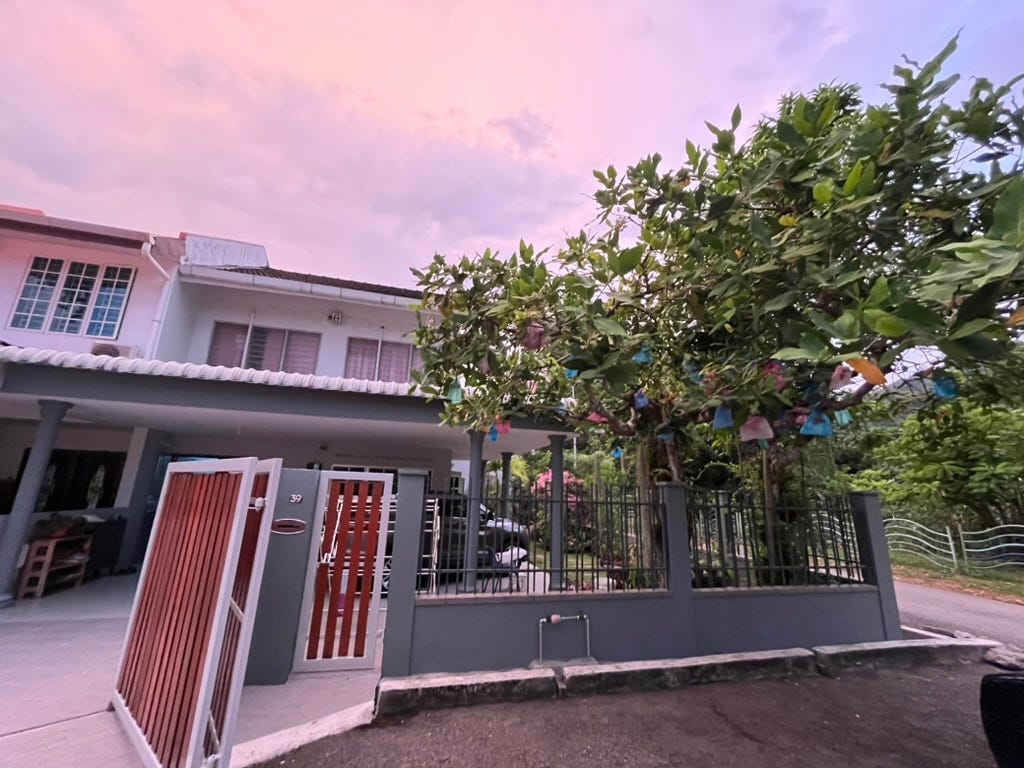
home (island park, penang)
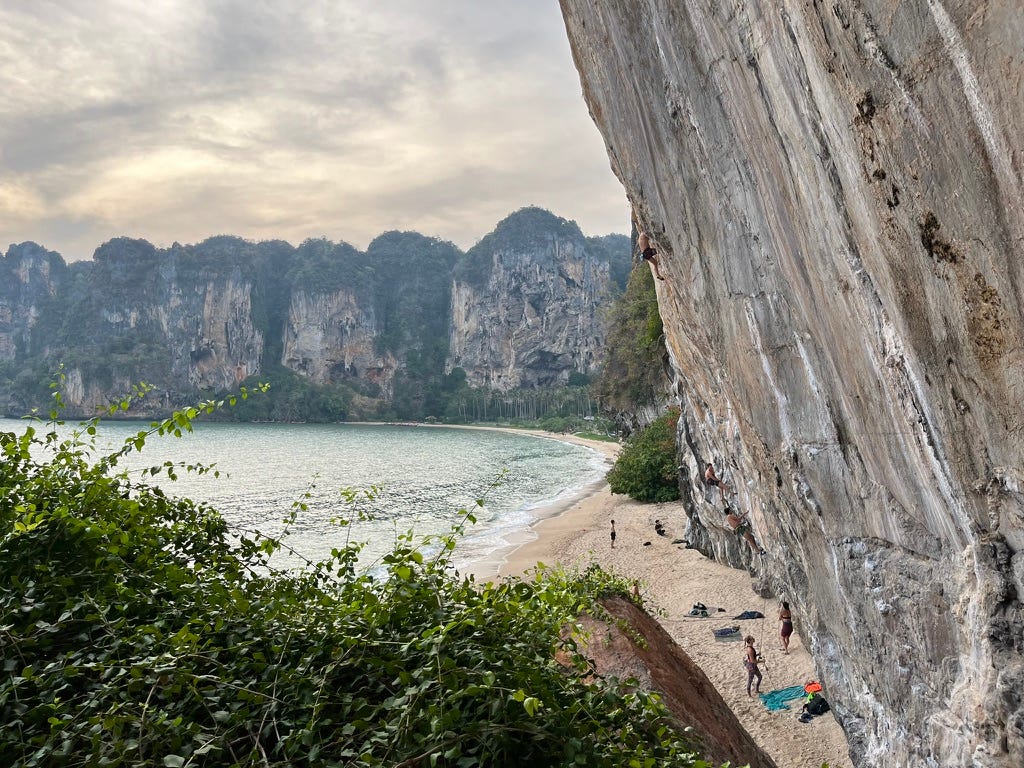
climbing on the beach (ton sai beach wall, thailand)
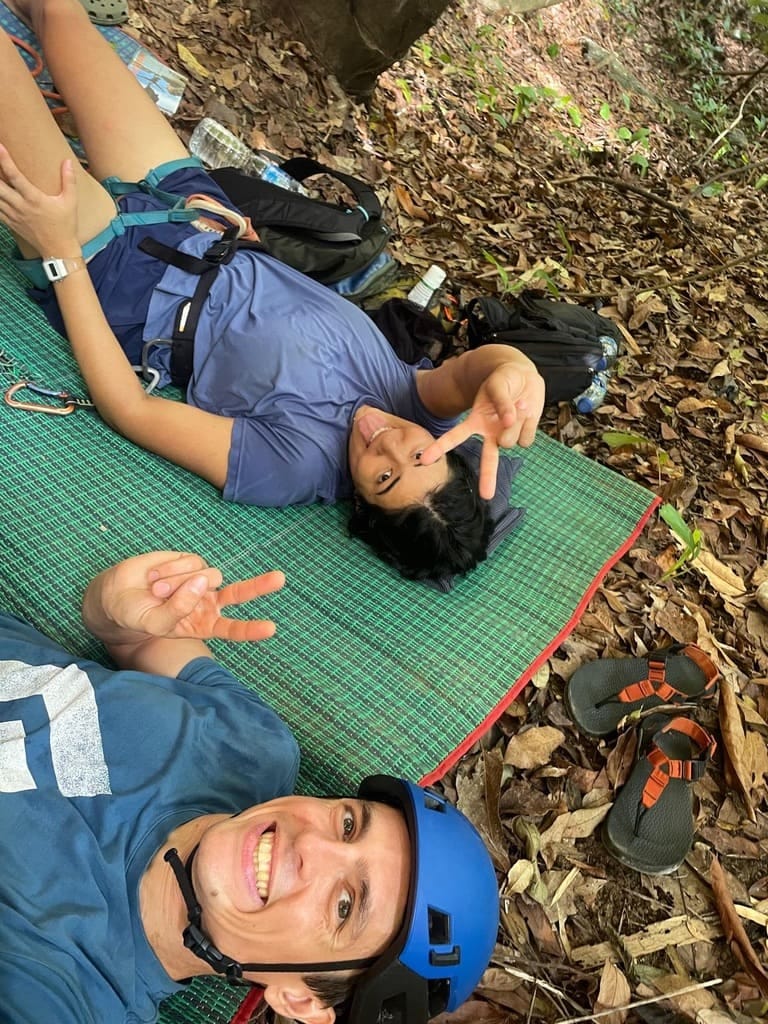
my climbing partner Bain and I chillin’ between burns (Ton Sai)
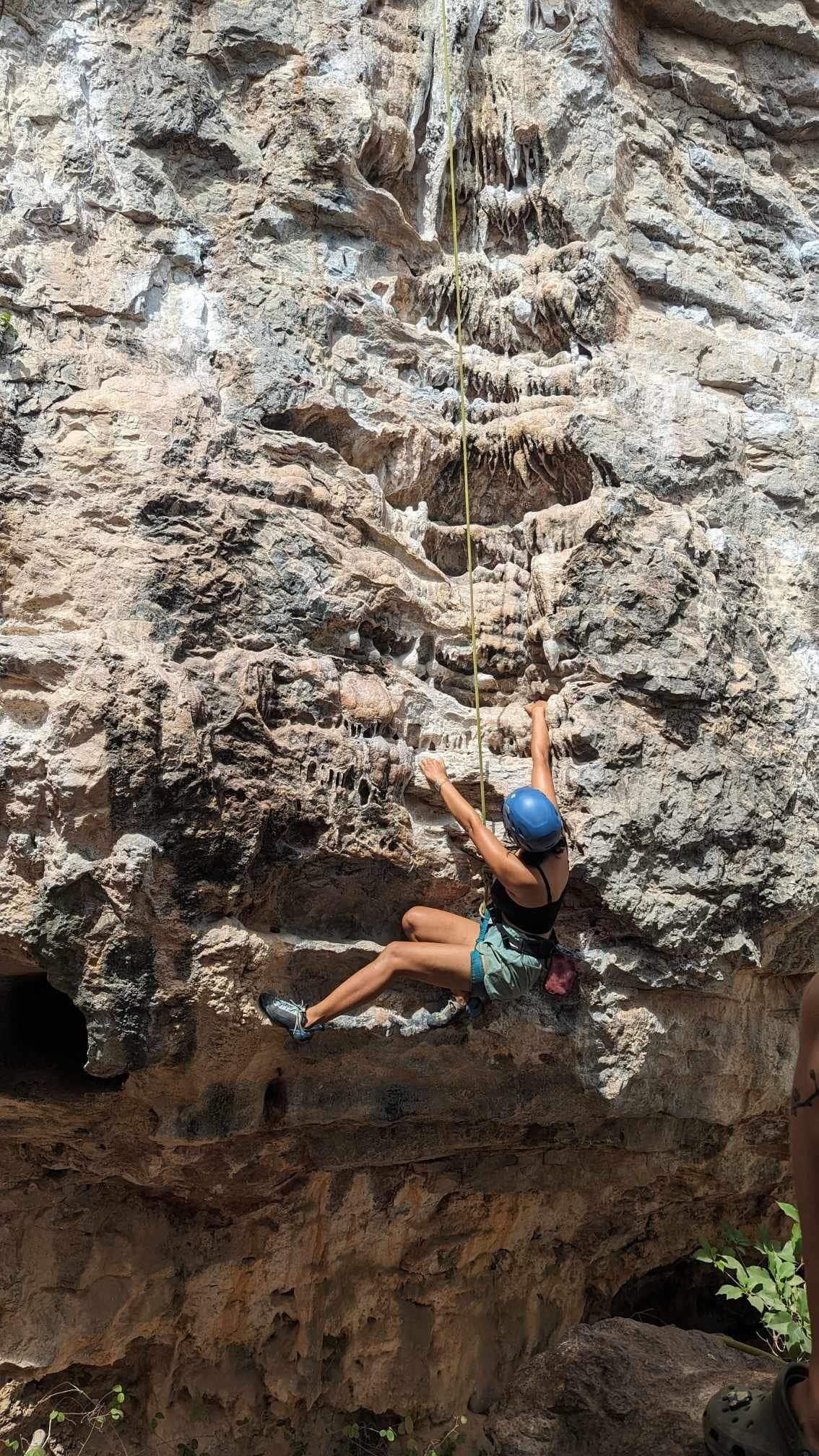
trying hard at … I think this was Eagle Crag
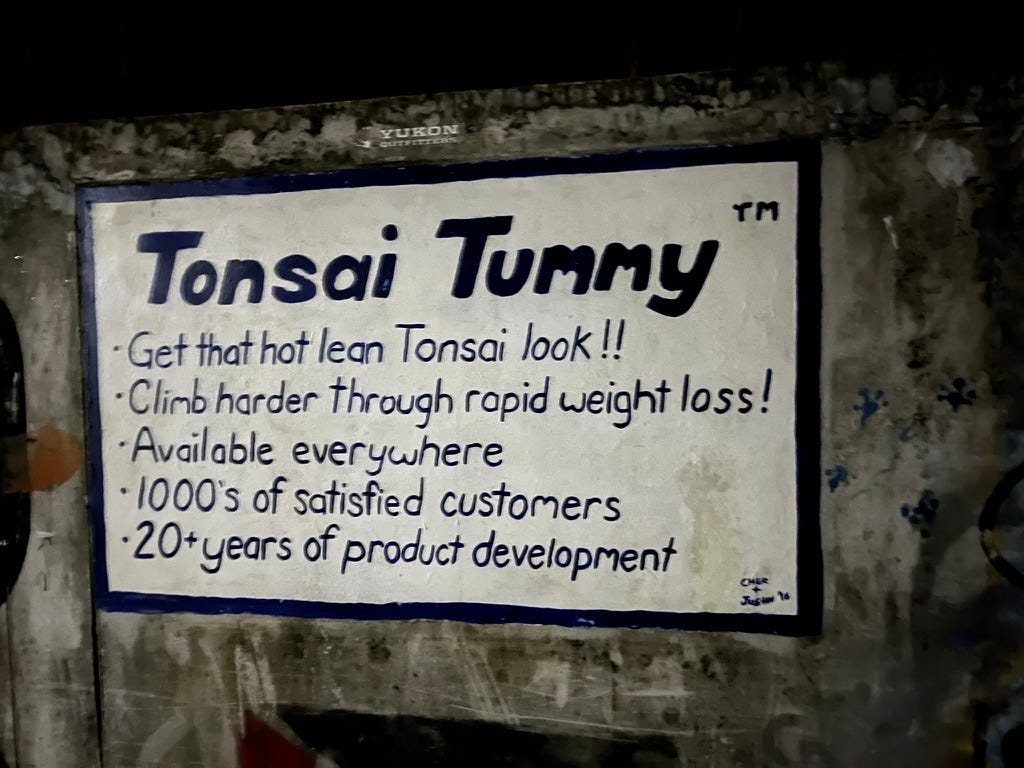
:P
I loved the vivid description of your experiences aloo baloo. Your voice is a gift to us. Keep writing. Abu
Hi, what a wonderful and nostalgic Monday morning read. I'm pretty sure I'm here because someone shared your page on reddit for WOC on the PCT and I thought, who is this fascinating person on the Internets? I sectionhiked parts of the PCT-CA/WA in 2020/2021 and can't wait to return. But I spent time during my first backpacking trip in 2017 in Penang and Tonsai, where I met the hostel worker who told me about the Sierras for the first time, which started my whole thruhiking journey. I still ache for the magic on that little stretch of jungle-beach, where all the travelers are passersby and every moment shared is a beautiful invitation. I remember the poetry on that wall too. This was a wonderful capture of all those feelings. It made me so emotional to know it all still exists, and someone else out there has felt the same way.
I loved your attention to the modernity/traditionalism in Penang and throughout Asia. I wonder if you've read Sightseeing, by Rattawut Lapcharoensap. If not, I think you would enjoy :)